Many marketers still assume digital fully replaced print. It hasn't. Tangible materials continue to drive trust, recall, and response in ways a screen simply can't match — and the data backs that up.
This guide breaks down what digital printing actually is, compares print and digital marketing side by side, and shows where each channel wins. By the end, you'll know how to combine both for a stronger, more resilient marketing mix.
Key Takeaways
- Print builds trust and memory; digital delivers speed, scale, and real-time optimization
- Consumers trust print ads at higher rates than search ads
- QR codes and unique URLs let print materials feed directly into digital funnels
- The strongest campaigns pair direct mail's local trust with digital's retargeting power
What Is Digital Printing? Common Types and Examples
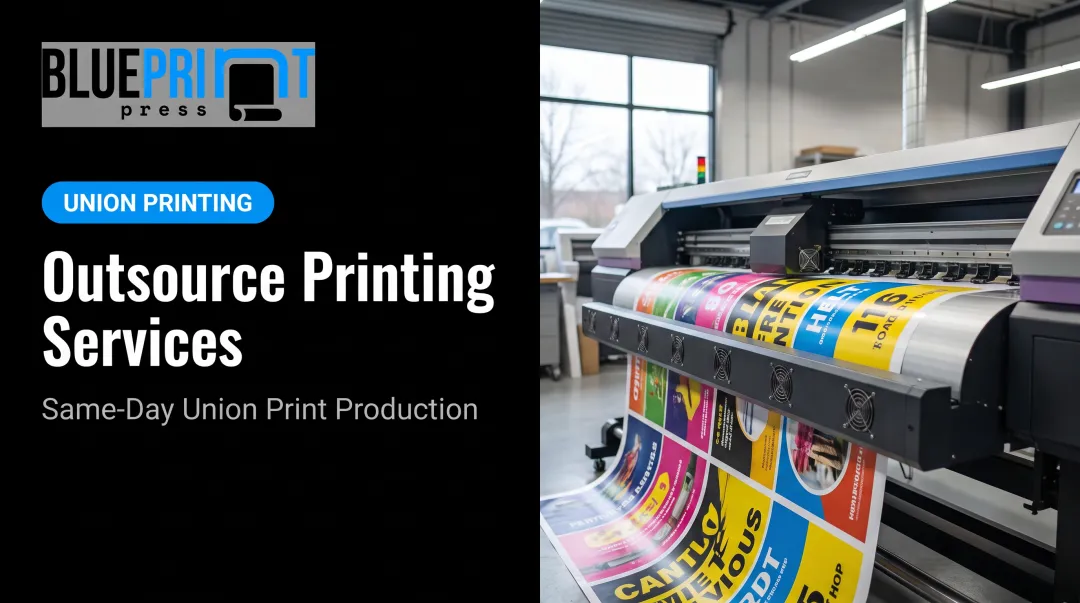
Digital printing sends a digital file straight to the press. No plates, no lengthy setup. Offset printing, by contrast, requires creating physical plates for every job, a fixed cost that only pays off at high volumes.
That difference matters most for shorter runs and quick turnarounds, where digital's plate-free process wins on both speed and price. Many jobs move from file upload to finished product the same day—something traditional offset can't match, since plate-making has to happen before a single piece rolls off the press.
Common digital printing formats include:
- Business cards, brochures, and flyers
- Banners, signs, and vinyl decals
- Car wraps and wall wraps
- Custom apparel through direct-to-film (DTF) printing
- Direct mail postcards and mailers

Personalization Through Variable Data Printing
Variable data printing (VDP) lets marketers personalize names, offers, or images on every piece within a print run. A batch of 5,000 direct mail postcards can each carry a different recipient's name or a location-specific offer without slowing production.
Substrates Beyond Paper
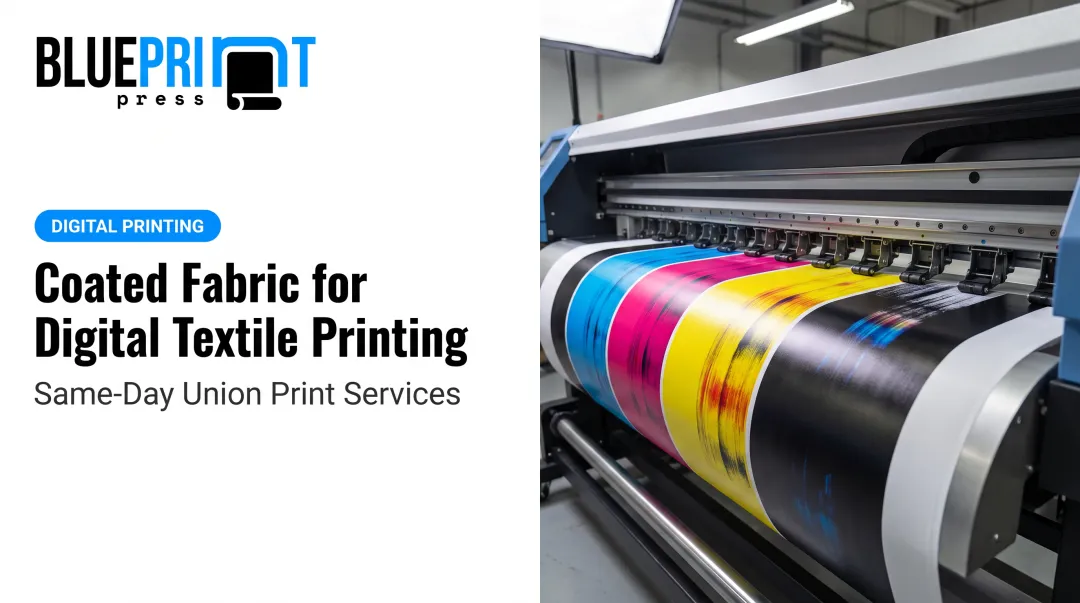
Digital presses aren't limited to paper. Modern equipment handles vinyl, cardstock, fabric, and synthetic materials like coroplast, so a single print shop can produce yard signs, apparel, and mailers without outsourcing.
Print Marketing vs. Digital Marketing: Core Differences
What Print Marketing Includes
Print marketing covers physical, tangible formats:
- Brochures and direct mail
- Signage and banners
- Business cards and palm cards
Each piece still needs design, production, and physical distribution before it reaches a customer.
What Digital Marketing Includes
Digital marketing runs online through channels such as:
- Social media ads
- Email campaigns
- SEO and PPC
Campaigns can launch, adjust, or pause within minutes of spotting underperformance.
Key Differences at a Glance
| Factor | Print Marketing | Digital Marketing |
|---|---|---|
| Cost structure | Upfront production investment | Ongoing, scalable ad spend |
| Reach & targeting | Strong for hyper-local, tangible reach | Precise demographic and geographic targeting at scale |
| Measurement | Requires QR codes, unique URLs, or mail-tracking tools | Built-in analytics dashboards |
| Speed to launch | Days for production and distribution | Minutes to go live |
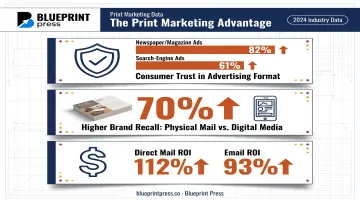
Neither channel wins on every factor: print is slower and more upfront-heavy, but it often holds its own on return. A 2021 ANA study found direct mail delivered a 112% reported ROI, compared to 93% for email, a gap that surprises marketers who assume digital automatically wins on returns.
Top Advantages of Print Marketing
Print still earns attention, trust, and recall in ways screens struggle to match. These advantages show up most clearly in four areas.
The Physical Connection Advantage
Holding a printed piece engages more of the senses than scrolling a feed does. That tactile, visual experience builds stronger, longer-lasting memories than digital exposure alone.
Trust and Credibility
Print still commands more consumer trust than most digital formats. A MarketingSherpa survey of 1,200 U.S. consumers found that 82% trusted newspaper and magazine ads, compared to just 61% for search-engine ads.
Focused Attention, Longer Shelf Life
A mailer doesn't compete with dozens of open browser tabs. It sits on a counter, gets revisited, and often ends up handed to someone else — especially for high-consideration purchases like real estate, elections, or event promotions.
Print also sidesteps digital obstacles that never touch a physical piece:
- Spam filters that bury promotional emails
- Ad blockers that strip banner ads before a user scrolls
- Feed algorithms that throttle organic social posts without paid boost
Brand Recall That Outperforms Screens
The neuromarketing data here is hard to ignore. A Canada Post study using brain imaging and eye tracking found physical mail produced 70% higher brand recall than digital media, along with a 20% higher motivation score. Higher recall plus stronger motivation is why print still moves people from notice to action.
Where Digital Marketing Wins
Digital marketing wins on speed, reach, and flexibility in ways print cannot match at the same cost.
- Scales a single campaign across a region or country with no added production cost
- Optimizes in real time with Google Analytics and built-in Google Ads experiments
- Spreads organically through shares and comments when content resonates
That said, digital's biggest strength — instant reach — is also where it loses trust. Consumers scroll past digital ads constantly. They don't scroll past what's sitting in their mailbox.
Why the Smartest Campaigns Combine Print and Digital
The best campaigns don't pick a side. They use QR codes and custom URLs on printed materials to push recipients into digital funnels, combining print's tangibility with digital's trackability.
Political campaigns and nonprofits do this well:
- Direct mail builds local trust and leaves a physical reminder in the household
- Digital ads retarget those same households for fundraising or event follow-up
- The message stays active long after the mailer lands
This is where Blueprint Press's direct mail service fits. It pairs professional printing with real-time tracking software, so clients can watch delivery and campaign performance unfold—much like checking a digital dashboard.
For teams spread across multiple locations, Employee Direct Delivery solves a related problem. Instead of shipping a bulk order to one office and hoping it gets distributed, Blueprint Press delivers materials directly to employees throughout Arizona and surrounding states.
Real-time tracking covers anything crossing state lines, giving physical distribution the same visibility marketers expect from digital tools.
Choosing the Right Print Partner for Your Marketing Mix
Not every print shop can keep pace with a campaign that blends physical and digital channels. A few things worth prioritizing:
- Speed and turnaround. Same-day production matters when a campaign timeline shifts overnight. Prioritize shops that pair that speed with union labor standards, so reliability doesn't come at the expense of ethics.
- Full-service capability. Managing five vendors for signage, apparel, and direct mail wastes time and creates inconsistency. A provider covering all three under one roof simplifies logistics.
- Durability for outdoor and large-format needs. Weatherproof vinyl signage matters if your materials sit outside for weeks, especially in extreme heat. For campaigns that span multiple states or cross into Canada, confirm your printer can ship reliably across that footprint.
If you're evaluating a print partner, request a quote to confirm turnaround times and pricing for your specific mix of products.
Frequently Asked Questions
What are examples of digital printing?
Common examples include business cards, brochures, banners, vinyl wraps, custom apparel, and direct mail pieces. Digital printing handles paper, vinyl, fabric, and synthetic substrates without needing printing plates.
Is print marketing still effective in a digital-first world?
Yes. Print continues to outperform digital in trust and recall, and it drives strong response rates when paired with digital retargeting and tracking tools.
How do businesses measure ROI on print marketing?
QR codes, unique promo codes, and dedicated direct mail tracking software all bridge the measurement gap. Marketers can track delivery and response rates the same way they would with a digital campaign.
Should political campaigns invest in print or digital ads?
Most successful campaigns use both. Print builds local trust through yard signs and mailers, while digital enables fast retargeting and fundraising follow-up.
Can print and digital marketing be integrated into one campaign?
Yes. QR codes, landing pages, and consistent branding connect print materials to digital funnels so recipients get one cohesive experience.
Is digital printing more affordable than offset printing for small runs?
Generally, yes. Digital printing eliminates plate and setup costs, making short runs and on-demand jobs more cost-effective than offset for smaller quantities.