Lanyards come in a wide range of materials, styles, and designs, each built for a different job. A hospital badge holder needs different features than a trade show giveaway or a summer camp keychain.
Choosing the right type matters more than most buyers realize. The wrong material wears out fast. The wrong attachment style creates a real safety hazard. The wrong print method wastes budget on detail nobody needed.
This guide breaks lanyard types down by material, by style and attachment, by design and customization options, and by how to match all three to your actual use case.
Key Takeaways
- Nylon, polyester, tubular, and woven materials each deliver different durability and print quality
- Breakaway, retractable, and double-ended styles shape safety and daily function as much as looks
- Customization spans screen printing, full-color dye-sublimation, and woven logos
- Choose by use case and safety needs, not just color or price
- A quality-focused printer prevents delays, misprints, and weak durability on bulk orders
What Is a Lanyard and Why Does It Matter?
What Is a Lanyard?
A lanyard is a cord or strap, usually worn around the neck or wrist, used to hold and quickly access items like ID badges, keys, tools, or USB drives. A clip, hook, or ring at the end secures whatever it's holding.
In craft circles you may still hear "scoobies," "boondoggle," or "gimp," but those names usually mean braided cord jewelry. Business lanyards are the printed straps built for badges, keys, and day-to-day access.
Why Lanyards Matter
Lanyards handle three jobs at once:
- Identification and security: Holds staff or visitor badges where they're visible and accessible
- Safety and convenience: Keeps tools, PPE, or access cards within reach without digging through pockets
- Branding and marketing: Puts a logo at eye level during events, conferences, and daily office wear
When the wrong lanyard is in place, problems show up fast. A YouGov survey conducted for Alcatraz AI found that among employees who had lost or forgotten a badge, 38% said it made them late to work or a meeting. That's lost time tied to a badge that wasn't on hand when it was needed.
Beyond lost time, mismatched lanyards create real risk: a non-breakaway design near machinery, or a generic strap that leaves your brand invisible at a trade show.
Types of Lanyards by Material
Lanyard "type" most often refers to material and weave. That's what drives durability, comfort, look, and how well a logo actually prints onto the strap.
Choosing between materials really comes down to balancing three things: budget, how often the lanyard gets worn, and how much print detail you need.
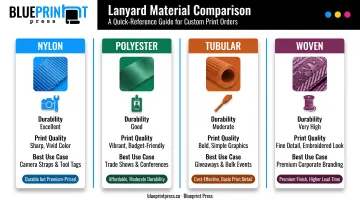
Nylon Lanyards
Nylon is smooth, glossy, and thicker than most alternatives. Its fine texture allows sharp, multi-color, detailed logo printing that holds up well over time. The added thickness also makes it suitable for heavier attachments like cameras, multi-tools, or access fobs.
Nylon works best for corporate offices, healthcare settings, and outdoor or heavy-use situations where a polished look and real strength both matter.
- Strength: Durability plus sharp print quality
- Limitation: Higher cost than polyester or tubular options
Polyester Lanyards
Polyester trades some of that durability for cost savings and softness. It's lightweight, affordable, and comfortable enough for all-day wear. That mix makes it the go-to for schools, offices, and large events ordering badges or giveaways in bulk.
It's also the most common choice for adding badge reels or breakaway clips, since the flat weave takes hardware attachments easily.
- Strength: Affordable and comfortable for all-day wear
- Limitation: Less durable than nylon under heavy or rough use
Tubular Lanyards
Tubular lanyards are lightweight, slightly stretchy straps made from loosely stitched polyester (or sometimes cotton) formed into a tube shape. That construction gives them a "shoelace" feel with actual give, unlike the flat weave of nylon or standard polyester.
They're best suited for holding lightweight items such as IDs, keys, and passports, and for long-wear situations like event staff or tour guides who need something comfortable for a full shift.
- Strength: Comfort and stretch for all-day wear
- Limitation: Less surface area for detailed, multi-color printing
Woven Lanyards
Woven lanyards have the logo stitched directly into the fabric during production, rather than printed on top of it. The result is a raised, embroidered look instead of a flat print, and it looks more premium.
They're best suited for organizations wanting a long-lasting, higher-end appearance for simple logos or short text, such as long-term staff credentials that need to look sharp for years.
- Strength: Strong durability and a higher-end appearance
- Limitation: Loses fine detail on complex, multi-color artwork
Lanyard Styles, Attachments & Design Examples
Lanyard Styles & Attachments
Beyond material, lanyards differ by connection style, and that choice affects safety as much as convenience.
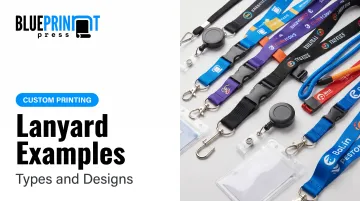
- Breakaway lanyards release under pressure to help prevent choking or injury — best for schools, factories, and settings with machinery or children
- Non-breakaway (standard) lanyards offer a single fixed loop and clip. Best for low-risk office or badge-holding situations where there's no snag hazard.
- Retractable lanyards with a built-in badge reel let a wearer swipe or scan without removing the strap.
- Double-ended lanyards use two clips, stopping badges from flipping around during the day.
- Adjustable-length lanyards offer a comfort option for varying body sizes, or let a neck strap convert into a wrist strap.
A quick-release clasp can open when pulled, but release isn't guaranteed in every scenario. IDenticard's product documentation notes that performance varies and recommends testing breakaways in the actual use environment before rollout.
Retractable and double-ended styles show up most often in security, healthcare, and visitor-management settings where badges need to be scanned repeatedly or displayed a certain way.
Design & Customization Examples
Printing method matters as much as material. Here's the quick rundown:
- Screen printing — bold, budget-friendly logos, ideal for one or two-color designs
- Dye-sublimation — full-color, photo-quality branding that Epson notes resists cracking and peeling as ink bonds into the fabric
- Woven printing — a stitched, textured look for simpler logos
Design examples go well beyond corporate branding, too. Camp and craft settings favor beaded, alphabet, shape, and character patterns, a different category from a printed corporate strap.
On the business side, real-world uses include:
- Color-coded lanyards distinguishing staff roles at hospitals or conferences
- Awareness-cause lanyards for nonprofit fundraising and outreach
- Branded lanyards handed out as trade show or campaign giveaways
For custom runs, Blueprint Press in Phoenix lists lanyards at $8.25 per unit, with per-unit, flat-rate, and volume pricing by order size. The shop is a 100% union-printed operation serving businesses, nonprofits, and political campaigns across Arizona and the Southwest, with shipping nationwide and into Canada.
Quote requests for lanyards typically get a response within 48 hours, which matters when a campaign or event date is already locked in.
Beyond the printed strap itself, accessories like charms, tassels, whistles, or water bottle holders let organizations personalize function and look. That extra step suits camps, conferences, or membership programs that want more than a plain badge holder.
How to Choose the Right Lanyard
The right lanyard depends on how and where you'll actually use it, not on what looks best in a catalog photo.
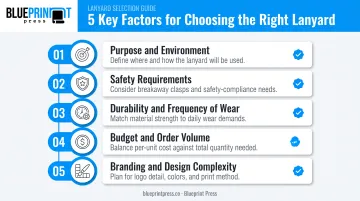
Run through these factors before you order:
- Purpose and environment: ID badges, tool-carrying, and one-time promo giveaways each call for different lanyards.
- Safety requirements: Does the setting need a breakaway clasp? Schools, factories, and healthcare environments usually do.
- Durability and frequency of wear: Daily staff use wears out cheap materials fast; a one-time event giveaway doesn't need heavy-duty nylon.
- Budget and order volume: Weigh material cost against the quantity you actually need.
- Branding and design complexity: A detailed, multi-color logo narrows your material and print method choices quickly.
What to Check Before You Finalize Your Order
A few common mistakes cost organizations time and money:
- Dye-sublimation looks great, but screen printing often covers branding needs at a fraction of the cost.
- Non-breakaway lanyards are a real hazard around children or machinery, not a minor technicality.
- Confirm turnaround times and minimum order quantities before you commit—especially for events and campaign launches, where a slow quote can push you past your deadline.
Conclusion
Lanyards do more than hold an ID. They support security, safety, and brand visibility across businesses, schools, nonprofits, and political campaigns.
Material, style, and design each solve a different problem. A durable nylon strap for daily staff use isn’t the same tool as a breakaway polyester lanyard for a school ID program.
Match material, hardware, and design to your environment first—and you’ll avoid costly reorders while getting a lanyard that performs as well as it looks.
Frequently Asked Questions
What are the different types of lanyards?
Lanyards differ by material (nylon or polyester), construction (tubular or woven), and attachment style (breakaway, retractable, or double-ended). Each combination suits a different use case, from daily office badges to event giveaways.
What do lanyards look like?
Lanyards are flat or tubular straps, typically 3/8 to 1 inch wide, finished with a clip, hook, or ring. Designs range from plain solid colors to full-color printed or woven patterns.
What can I use instead of a lanyard?
Common alternatives include badge reels, belt or pocket clips, arm-band holders, and magnetic badge holders. These work well when a neck strap isn't practical, such as in kitchens or on factory floors.
What is the most durable type of lanyard?
Nylon and woven lanyards hold up best under heavy or long-term use. Tubular and basic polyester options are comfortable but wear out faster with daily use.
Do all lanyards need a breakaway feature?
Breakaway clasps are strongly recommended, and often required, in schools, factories, or any setting with machinery. Low-risk office environments usually don't need one, though many organizations add it anyway for peace of mind.
Can lanyards be customized with a company logo?
Yes. Most lanyard materials can be customized through screen printing, dye-sublimation, or woven logos. Blueprint Press offers union-printed custom lanyards suited to business branding, nonprofit outreach, and campaign giveaways.