Introduction
Every business, campaign, and event team wants sharp, vibrant printed graphics. Fewer realize that the fabric matters just as much as the printer.
Custom fabric printing demand keeps climbing as teams push for faster turnaround, shorter runs, and more personalization.
A 2023 FESPA global census found that 67% of printers and signmakers reported rising demand for faster turnaround, while 58% saw more requests for shorter runs.
But here's what most people miss: the printer only does half the job. The fabric underneath, specifically whether it's coated, determines whether your banner looks crisp or comes out blurry and washed out.
This guide breaks down what coated fabric actually is, how the printing process works, and how to pick the right material and print partner for your next project.
Key Takeaways
- Surface coatings let inkjet printers lay ink precisely, yielding sharper, richer prints than raw textiles
- Pigment, dye-sub, or polymer coatings control color hold, fade resistance, and indoor/outdoor durability
- Trade show displays, banners, wall wraps, and DTF apparel rely on coated fabric for clean, lasting results
- Fabric weight, coating type, and print partner choice shape how professional and durable the finished piece looks
What Is Coated Fabric for Digital Textile Printing?
Coated fabric is a textile treated with a receptive layer that gives inkjet print heads a surface to work with. Common treatments include pigment-receptive coatings, polyurethane finishes, and polymer applications. Instead of soaking through the weave, ink stays where it's placed.
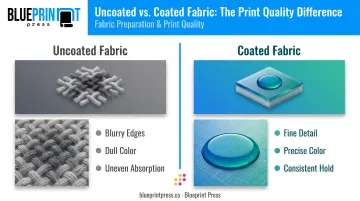
Think of raw fabric like a paper towel. Drop ink on it, and it spreads unevenly in every direction. A coated fabric works more like glossy photo paper: the coating acts as a barrier layer that holds ink on the surface fibers.
That's the real difference between coated and uncoated textiles:
- Uncoated fabric absorbs ink unevenly, causing blurry edges and dull color
- Coated fabric holds ink precisely, enabling fine detail and consistent, accurate color
This is also why the answer to "can you digitally print on fabric?" is yes for nearly any base material. Cotton, polyester, canvas, and blends can all accept sharp digital prints once they're properly coated or paired with the right ink system for that fiber.
Types of Coated Fabric Used in Digital Printing
Not all coated fabrics serve the same purpose. Common categories include:
- Polyester-coated banner and poplin material — lightweight, versatile, widely used for indoor signage and soft-goods printing
- Coated canvas — heavier weight, used for apparel graphics and soft signage where durability matters
- Blockout (opaque) coated fabric — engineered for double-sided banners and backlit displays where light bleed-through would ruin the graphic
Weave and weight matter too. A controlled inkjet study on polyester fabrics found that construction affects image quality directly: plain weave produced the sharpest lines, while satin weave performed worst on unfinished material.
The same study found that acrylic finishes significantly improved edge quality, while polyurethane finishes barely outperformed unfinished fabric. Coating chemistry matters as much as how the fabric looks or feels.
How Digital Printing on Coated Fabric Works
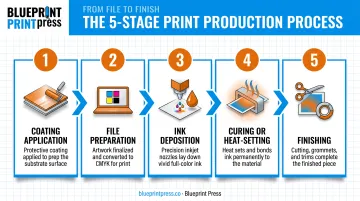
Getting from blank fabric to finished banner or garment involves five distinct steps.
- Coating application — A pretreatment applies the receptive layer to the base fabric, creating the ink-receptive surface the print needs.
- File preparation — Build designs digitally, typically in CMYK. FESPA recommends staying above 100 ppi effective resolution; a 300 ppi image enlarged 200% drops to 150 ppi, so start with enough resolution.
- Ink deposition — Industrial inkjet print heads lay down ink droplets onto the coated surface with tight precision, building color and detail layer by layer. With no screens or plates, there is no setup delay.
- Curing or heat-setting — The printed fabric goes through a drying or heat-setting stage that bonds ink into the coating for durability.
- Finishing — Trimming, hemming, or grommeting prepares the material for its final use, whether a hanging banner, wall wrap, or finished garment.
Blueprint Press handles textile jobs through its DTF (Direct-to-Fabric) printing process, which produces durable color across a wide range of fabrics. The same workflow fits a single custom shirt or a full batch of event banners.
Benefits of Coated Fabric for Digital Printing
Sharper Detail, Richer Color
When ink sits precisely where it's printed instead of spreading through fibers, you get sharper resolution and more accurate color reproduction. This matters most for designs with fine text, gradients, or photographic detail, where even slight bleed ruins the effect.
FESPA's analysis of hybrid production methods found that with four or more colors, digital printing is often superior because it renders fine gradients and granular detail more easily than screen printing.
Screen printing still wins on raw opacity and long-term outdoor wear. For detailed, multi-color graphics, though, coated-fabric digital printing frequently comes out ahead.
Built for Durability
Proper ink bonding and curing help coated fabrics resist fading, handling wear, and repeated use better than uncoated textiles.
That longevity matters for outdoor and high-touch pieces. Blueprint Press specs materials built for Arizona's intense heat so campaign and event graphics hold up through a full season instead of fading after a few weeks outdoors.
No Screens, No Waste
Digital printing on coated fabric skips the setup overhead traditional methods require:
- No screens or plates to burn for each design
- No large minimum print runs to justify setup costs
- Fast turnaround from file to finished product
- Lower material waste since each piece prints on demand
Best Applications and Uses for Coated Fabric Prints
Trade Show Displays and Backdrops
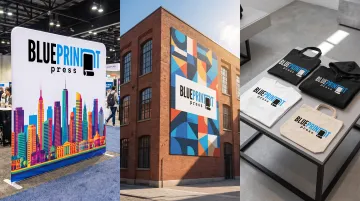
Coated fabric produces crisp branding, logos, and photographic graphics that hold up through repeated setup, teardown, and travel. For exhibitors who reuse the same backdrop across multiple events, that durability directly protects your investment.
Outdoor Signage and Wall Wraps
Outdoor graphics face heat, sun, and constant weather exposure. Blueprint Press produces wide-format coated fabric graphics built to handle Arizona's extreme heat across a full campaign season. They resist the fading and cracking cheaper materials often show within weeks.
Branded Apparel and Merchandise
DTF printing on coated textiles is a strong fit for branded apparel and promotional merchandise. Blueprint Press's DTF printing service delivers vibrant, long-lasting results for:
- Businesses building branded team apparel
- Nonprofits producing outreach merchandise
- Political campaigns needing fast-turnaround gear
Because DTF works across virtually any fabric type, the same process scales from a handful of shirts to a full merchandise run without switching equipment or methods.
How to Choose the Right Coated Fabric and Print Partner
Picking the right material starts with a few honest questions about the job itself.
Consider your use case first:
- Will this hang indoors or face outdoor weather?
- Does it need to print on one side or both (which points toward blockout fabric)?
- How heavy does the fabric need to be for the intended display method?
Then vet your print partner. Ask potential vendors:
- What ink system do they run, and is it suited to your fabric type?
- What's their curing process, and does it match the durability you need?
- Do they test for colorfastness or durability, or can they point to real project experience?
Finally, look for a partner who handles the entire job, not just the printing.
Blueprint Press operates as a one-stop, union-printed shop covering design support, coated fabric and vinyl printing, finishing, and shipping. Orders ship with real-time tracking, and Arizona-area clients can use Employee Direct Delivery to get materials straight into staff hands with no separate shipping coordination required.
Frequently Asked Questions
Can you digitally print on fabric?
Yes. Modern inkjet technology combined with fabric coatings or matched ink systems allows digital printing on cotton, polyester, canvas, and blended textiles. The right combination depends on the fabric and finish you're using.
What are coated fabrics?
Coated fabrics are textiles treated with a receptive layer that keeps ink on the surface instead of letting it soak through the weave. This produces sharper lines, finer detail, and more accurate color than raw, untreated fabric.
Is digitally printed fabric good quality?
Quality depends heavily on the coating and ink system used. Properly coated fabric with the right ink can match or exceed traditional screen printing for detailed, multi-color, or photographic designs.
Does digital printing on fabric fade?
Some fading can occur over time from sun exposure and washing. Quality coatings, well-matched inks, and proper curing significantly extend colorfastness, especially for outdoor pieces.
What fabrics work best for digital printing?
Smooth, tightly woven materials like coated polyester, canvas, and poplin typically produce the sharpest, most vibrant results. Weave construction affects sharpness as much as the coating itself.
How do I care for digitally printed fabric to keep it from fading?
Wash gently, avoid harsh chemicals or bleach, and limit prolonged direct sun exposure for outdoor pieces. For project-specific care questions, reach out to your print provider directly.